
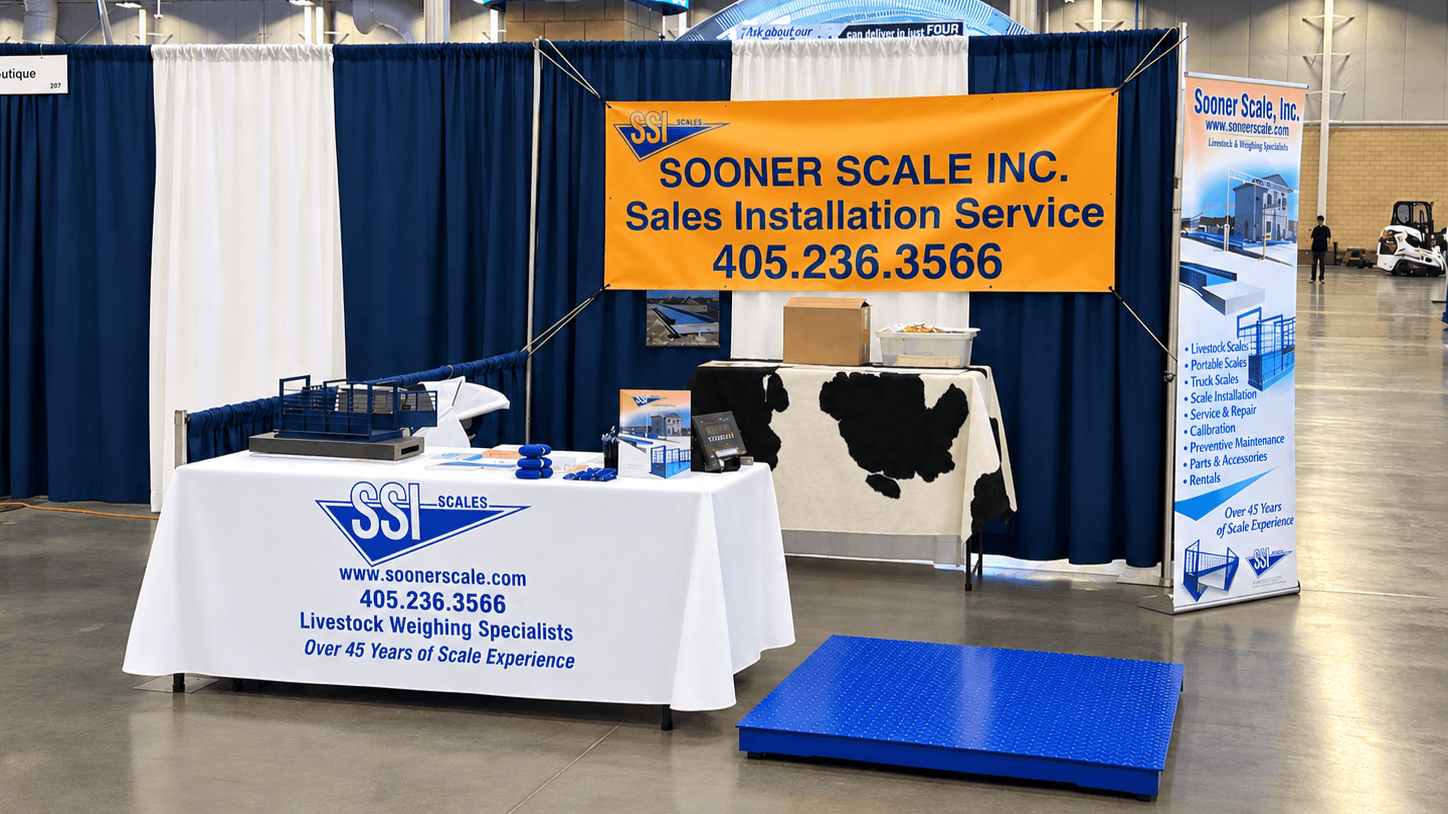
Why Do You Need a Livestock Scale?
Most of the decisions on a ranch or farm come down to weight. How much medicine to give, how much feed to buy, when to breed, and when to sell all depend on a number. A livestock scale gives you that number instead of a guess.
You get paid by the pound
Cattle, hogs, lambs, and goats are sold by weight, priced per pound or per hundredweight. If you do not know what your animals weigh, you are relying on the buyer’s scale or your own estimate.
With your own scale, you can:
- Know your weights before you talk price
- Check a buyer’s numbers against yours
- Decide whether to sell now or hold another 30 days
- Sort animals into even groups that bring more money
Small errors add up fast. On 50 calves, a 25 pound miss per head is 1,250 pounds of product.
Medicine is dosed by body weight
Dewormers, antibiotics, anti-inflammatories, and many vaccines are dosed by weight. The label tells you the amount per pound or per weight range.
If you guess low, the treatment may not work, and underdosing is a recognized contributor to dewormer resistance in sheep and goats. If you guess high, you waste product you paid for and can run into safety and withdrawal problems. A scale lets you dose each animal correctly the first time.
Weighing is the only way to measure gain
Average daily gain (ADG) is how many pounds an animal gains per day. You weigh at two points and divide the weight gained by the number of days.
Example: a steer weighs 650 lb on May 1 and 800 lb on June 30. That is 150 lb in 60 days, or 2.5 lb per day.
Without regular weights, you cannot calculate ADG. With them, you can see which animals are performing and whether your ration, pasture, or health program is working.
Feed is your biggest cost, and a scale shows what it is buying
Feed conversion is how much feed it takes to put on one pound of gain. You cannot figure it without knowing how much weight the animals actually gained.
Regular weights let you:
- Compare rations, supplements, and pasture with real numbers
- Find animals that eat well but do not gain
- Adjust feed as animals grow
- Stop feeding animals that are already ready to sell
Breeding and weaning depend on weight, not age
Age does not tell you if an animal is ready. Weight does.
Replacement heifers are commonly targeted to reach about 60 to 65 percent of their expected mature weight by breeding. Heifers bred too light can have lower conception rates and more calving trouble.
Weaning weights also show you which cows, ewes, and does are raising the best offspring, which helps you decide who stays and who goes.
Weight changes are often the first sign of a health problem
Parasites, respiratory disease, poor nutrition, and dental problems can show up on the scale before you see them in the animal. Regular weigh-ins give you a record for each animal, so you can act early and give your veterinarian real numbers.
Eyeballing and weight tapes miss
Condition, hair coat, gut fill, and frame all change how an animal looks. Weight tapes measure girth and estimate weight, so they can be off on animals that are thin, heavy, pregnant, or built differently. A scale reads actual weight.
Records for genetics and herd improvement
If you sell breeding stock, register animals, or take part in performance programs, weights are part of the paperwork. Birth weight, weaning weight, and yearling weight are standard measurements in performance records and breed association reporting. Weights let you cull and select on results instead of appearance.
Hauling loads need weights too
Trucks and trailers have weight limits. Knowing what a load weighs helps you stay legal, plan how many head go on each trip, and compare hauling cost against sale value.
Which type of livestock scale fits your operation
- Chute scales and load bars: Weigh animals while you already have them in the chute for vaccinations or treatment. Common on cattle operations.
- Platform scales: A flat deck animals walk onto. Used for hogs, sheep, goats, and calves.
- Portable scales: Move between pens, pastures, or locations.
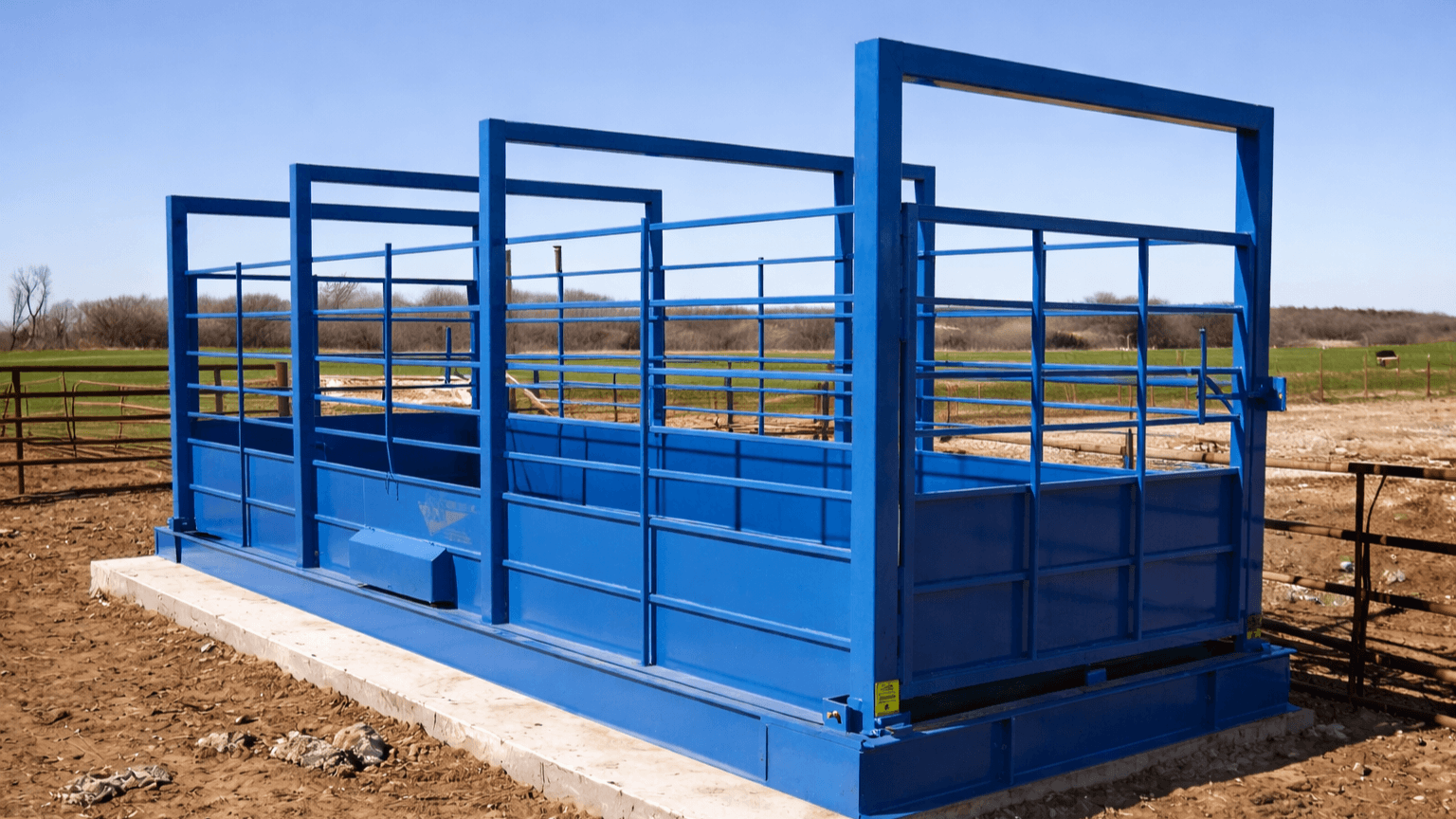
- Permanent installations: Set on a concrete pad for daily use at a working facility.
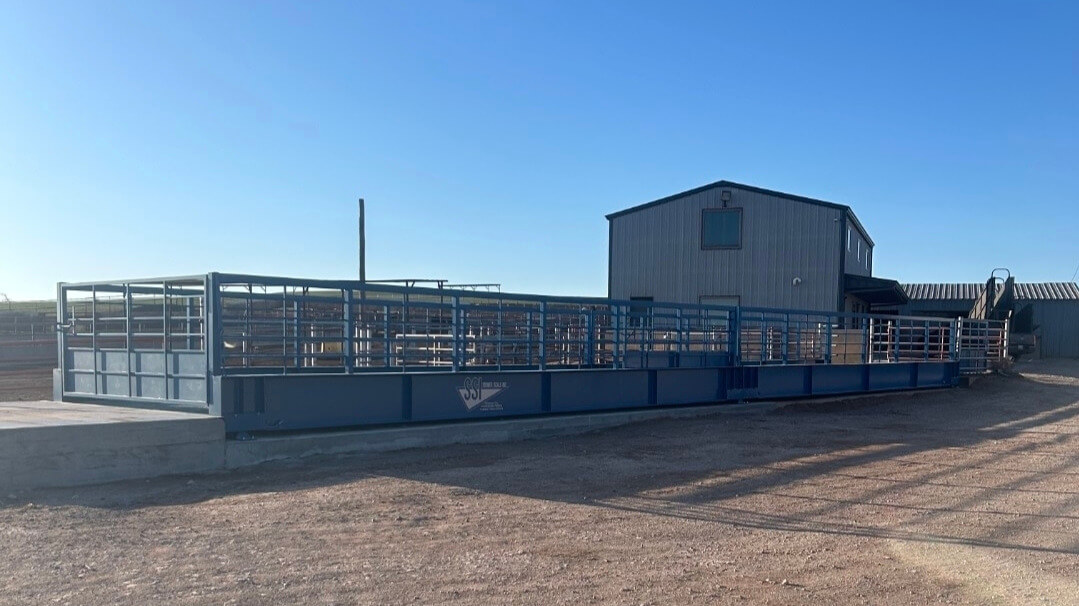
- Combo truck and livestock scales: One system that weighs both animals and loaded trucks.
What to look for when you buy
- Capacity: Rated above the heaviest animal you will weigh
- NTEP certification: If you sell by the pound from your scale, legal for trade certification may be required. Check your state’s rules.
- Durability: Weather-resistant load cells and a rugged indicator
- Electronic ID compatibility: Connects to an EID reader to record weights by animal
- Data storage: Saves weights so you are not copying numbers by hand
- Calibration: Can be checked with known test weights
- Service and support: Someone to call when you need parts, calibration, or repair
Tips for accurate weights
- Set the scale on firm, level ground
- Zero it before each session
- Weigh at the same time of day and under the same feed and water conditions
- Keep animals calm, since movement causes unstable readings
- Clean mud and manure off the platform
- Check the scale against known weights on a schedule
Common questions
How often should I weigh my livestock?
Common times are birth, weaning, before breeding, before and after treatment, during growth, and before sale. Many producers weigh growing animals every 30 to 60 days.
Do I need a legal for trade scale?
If you sell animals by the pound based on your scale’s reading, a buyer or state regulation may require NTEP certification. If the scale is only for management, it usually is not required.
Can one scale weigh different species?
Often, yes, if the capacity and platform size fit. Cattle need a higher capacity and a sturdier setup than sheep, goats, or hogs.
Should I buy a portable or permanent scale?
It depends on how many locations you work and how often you weigh. Permanent installations need site prep and a cured concrete pad, so plan ahead.
What to do if you are thinking about a scale
If you have been putting off a scale, look at what guessing costs you each year in medicine, feed, and sale weights. Then tell us your species, herd size, and setup. We will walk through what fits your operation and give you a straight price.
Have questions? We’re here to help.
#LivestockScale #LivestockScales #CattleScale #CattleScales #ChuteScale #AnimalScale #WeighScale #WeighingCattle #CattleWeights #AverageDailyGain #RanchLife #RanchManagement #RanchEquipment #FarmEquipment #BeefCattle #BeefProduction #CattleRancher #CattleFarming #LivestockFarming #SheepAndGoats #HogFarming #AgEquipment #AgLife #FarmLife #OklahomaAgriculture #OklahomaAg #NTEPCertified


Ready to Talk Through What You Need?
Whether you know what you want or are not sure where to start, contact us. We will ask the right questions, give you honest guidance, and put a straight number in front of you. No pressure and no upsell on equipment you do not need.
Call us (405) 236-3566